Table of Content
I tested this by playing the song Havana by Camilla Cabelo at four different volumes . Then I played back a recording of myself saying “Hey Google” and played it from a separate speaker at distance of 5, 10, 15, and 20 feet. Sure, this isn’t the most scientific test ever devised but it does highlight how at higher volumes the microphones on the speaker have a hard time picking up voices. Our spatial tests measure a speaker’s ability to reproduce stereo sound in all directions, taking into account localizability, balance, wideness, distance, and directivity. Please note that wideness is 0 for mono speakers and for speakers that cannot deliver a significant stereo effect. There is a mute switch on the back of the speaker that will turn off the microphone and stop Max from listening for the wake command.
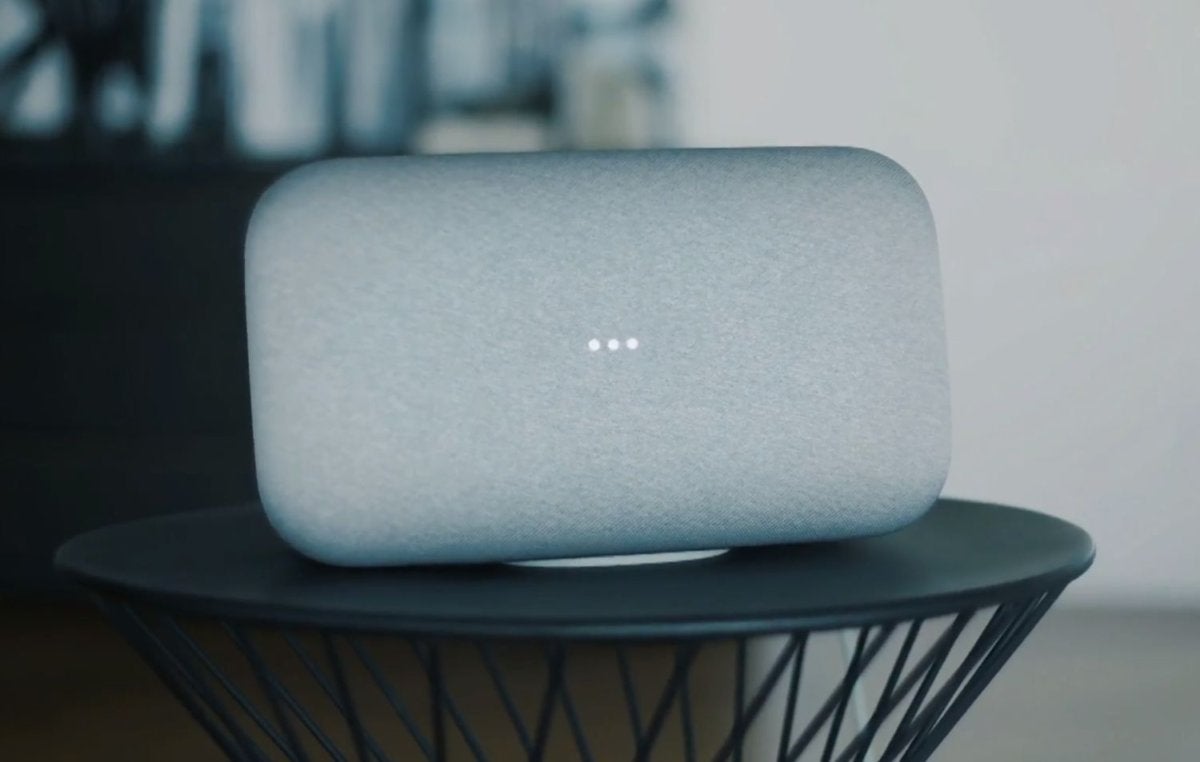
So each time you move it, the speaker will automatically readjust Smart Sound to ensure it's blaring the best sounding tunes possible. The Google Home speakers light up to show when they’re listening, but sometimes they might be triggered on accidentally by something that sounds similar to the hotword. Because of the large size, the Google Home Max can really push some air so the low end is fairly strong just because of physics. In the song Moon River by Frank Ocean, the low E string is a little too strong for my taste, but it gives the song some grittiness and never gets in the way of his vocals in the midrange, which is what counts.
Should you buy the Google Home Max?
The total sound from all 4 speakers in this unit is state of the art, very loud and not distorted at all. If you like the idea of a smart speaker but also want Bluetooth so that you can bring the speaker with you when you go outside then you should check out the Sonos Move. While it’s still on the pricey side you get Bluetooth functionality as well as the entire Sonos ecosystem behind to build upon. No the Google Home Max isn’t spying on you, as in, it isn’t recording your conversations and delivering them to some foreign government.
That said, browsing is basically impossible because you’re interfacing with your TV through voice. You have to know what you want to watch, and then tell the Google Home Max to cast it. When it comes to setting up a home audio system, it usually requires some confusion and a bunch of cables. That’s been slowly getting better , but that’s not an issue at all with the Google Home Max. Setting it up is as easy as plugging it in and opening up the Google Home app.
Related Products
This Nedis® speaker stand allows you to easily position your Google Home® speaker exactly where you need it in your room. The DXOMARK Speaker overall score of 145 for the Google Home Max is derived from a range of sub-scores. If you haven't already, we suggest restarting your Wi-Fi router. Unplug the router from the power outlet, wait at least 60 seconds before plugging it back in. If your Google Home Max is the only device that disconnects from Wi-Fi, we suggest performing a factory reset on it to make sure it's cleared then set it up. Google Home Max is built with advanced hardware for the ultimate in high–fidelity music with dual 4.5-inch woofers and crystal–clear highs from 2 tweeters.
I have the original Home and am very impressed with the quality and especially the sound. When I purchased the MAX speaker I was skeptical because of the price. But once I heard it I was so blown away by the bass, and the clean highs, it is Amazing.
Reviews of Motivational Speakers
We put the Google Home Max through our rigorous DXOMARK Wireless Speaker test suite. In this review, we will break down how it fared at audio playback in a variety of tests and several common use cases. Basically, Smart Sound will adjust the sound quality pumped out of the speaker based on, not only the room you placed it in but where in the room it's placed.
If you’re like me and need to be reminded of basic facts throughout the day, the Google Assistant still gives the best answers out of any personal assistant and it’s only getting better with time. The steel speaker mount is strong enough to carry a speaker with a maximum weight of 2 kg. Hire a motivational speaker for a conference, party or event in Frankfurt am Main, Regierungsbezirk Darmstadt, Hesse, Germany.
Our volume tests measure both the maximum loudness a speaker is able to produce and how smoothly volume increases and decreases based on user input. The speaker’s overall dynamics remain particularly precise and impactful at soft and even quiet volumes. Play music from apps like YouTube Music, Pandora and Spotify by streaming over Wi–Fi.† Play, pause, skip, control the volume, and more with just your voice. It's giant, loud, and fully capable of doing anything and everything you'd expect from one of Google's smart speakers. After unboxing yours, here's what you need to know about setting it up and getting started with the Max.
Taking a step back from the details in build materials, one of my favorite things about the speaker is its simple and minimal design. Besides the switch on the back , the Google Home Max is just one block of plastic. There aren’t any knobs or buttons to take away from the smooth design which makes sense since most of the functionality can be controlled with your voice. There is just one touch sensitive area on the side of the speaker that’s responsible for volume control or pausing/playing music, but that’s it. And because you can orient the speaker vertically or horizontally that touch-sensitive bit can either be on top or on the right side. One helpful feature is that a voice will tell you when you’ve accidentally turned the speaker turned upside-down if you’re moving it.
Attack in midrange frequencies is precise, bass precision is globally very satisfying, and punch at loud volumes is very good. Additionally, the overall dynamics performance is particularly impressive at soft and even quiet levels with sharp attack, precise bass, and good punch. The slight emphasis in the lower frequencies will probably be a positive for most people because of its subtlety. It doesn’t overpower the mids at all and when paired with how loud this thing can get, so it’s perfect for powering your parties. That said, it sounded good even at low volumes and I ended up using it to play music in the background throughout the day as well. DXOMARK timbre tests measure how well a speaker reproduces sound across the audible tonal range and takes into account bass, midrange, treble, tonal balance, and volume dependency.

Around back you’ll get the power supply input, a 3.5mm input, and a physical mute switch. The mute switch doesn’t stop music playback, it just turns off the microphone so it isn’t always listening for the hotword. Speaking of which, I found that the microphones on the Google Home Max aren’t too good at picking up my voice when music was playing around 75% or above. I found myself borderline yelling “Okay Google” and sometimes, even then I would just have to walk over to it and physically lower the volume. With an overall score of 145, the Google Home Max ranks second-best among all speakers we have tested to date, after Harman Kardon’s Citation 200. Google’s largest smart speaker delivers a great overall audio performance, with a good tonal balance, full and precise midrange frequencies , great volume consistency, and realistic distance rendering.
The rubber bass pad also keeps the rumbling of the speaker from disturbing anything around it. On the top is a touch-sensitive section for playback and volume. The small lights behind the fabric light up when you speak or adjust playback.

One of the headlining features of Max to drive that point home is something Google calls Smart Sound. Setup consists of connecting the Max to your Wi-Fi network, adding a Google account, training it to recognize your voice, and updating its software. It also owes its good ranking to its great volume step consistency and its excellent maximum volume.


No comments:
Post a Comment